 Free
On foot
DOC's viewpoint track
- Track
- South Side Walkway
- Length
- 6.4 km return
- Ice
- View only
Guides
Language
EnglishCurrency
US dollar · $Prices on GetYourGuide appear in your chosen currency.
Guide · Access
The short answer is no: today the only way onto the ice is by air. The longer answer explains why, how close you can get on foot, and the cheapest ways to see the glacier well.
Editorial team, foxglaciertours.comUpdated October 25, 2026read in 6 minutes18 sources
Quick answer
Standing at the end of a valley track, the glacier looks close and solid, and it is natural to wonder why you cannot simply continue. The answer is that the bottom of a glacier is the most dangerous part of it. DOC's page on neighbouring Franz Josef Glacier warns that ice collapse and rock fall can occur at any time at the terminal face, and tells visitors not to go beyond the rope barrier.2
The river is the second danger. Glacial rivers can be dammed by falling ice, and if the dam bursts it sends a surge of water and ice down the valley.4 Downpours can flood the valley within minutes, which is why DOC asks walkers to follow the marked track, obey all signs and never cross barriers.41
So the honest answer to whether you can walk on Fox Glacier from the ground is no. DOC's own track to the glacier ends at a viewpoint, and its page says plainly not to go past that point because of extreme flood hazard.5 Anyone who climbs over a barrier is risking far more than a fine, and putting rescuers at risk too.
How access changed
Early 1900s
The Government funded tracks for the stream of glacier tourists.6
1934 to 1983
The biggest overall loss in the length record.7
1985 to 1999
Fox advanced 710 m.8
2004 to 2008
Fox advanced 290 m.8
2014
The fastest retreat in the records of both glaciers.9
March 2026
DOC links climate change to fewer usable landing sites.10
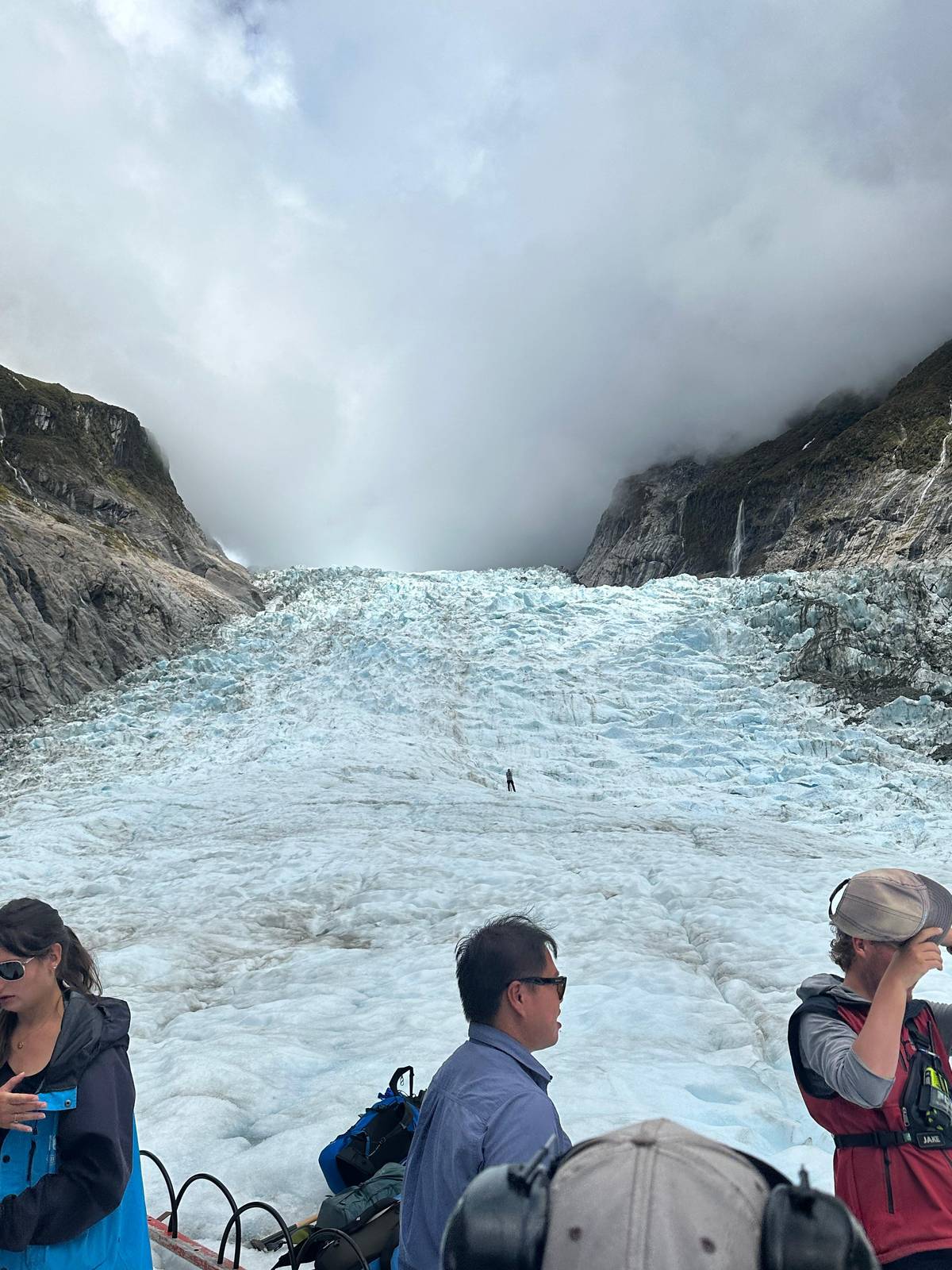
The closest public approach is the South Side Walkway/Cycleway, which starts 2 km south of the township and runs 6.4 km return, about 2 hours on foot.113 The first glacier view comes after about 40 minutes, and the final viewpoint is about 10 minutes beyond an old car park.5 DOC states that the glacier viewpoints are hundreds of metres from the face of the glacier.1
That distance is a feature, not a flaw. From there you see the whole lower glacier in its valley, rather than a dirty wall of ice in front of your nose. Bring binoculars or a phone with a good zoom, and look for the blue in the cracks and the way the ice pours over the steps of the icefall above.
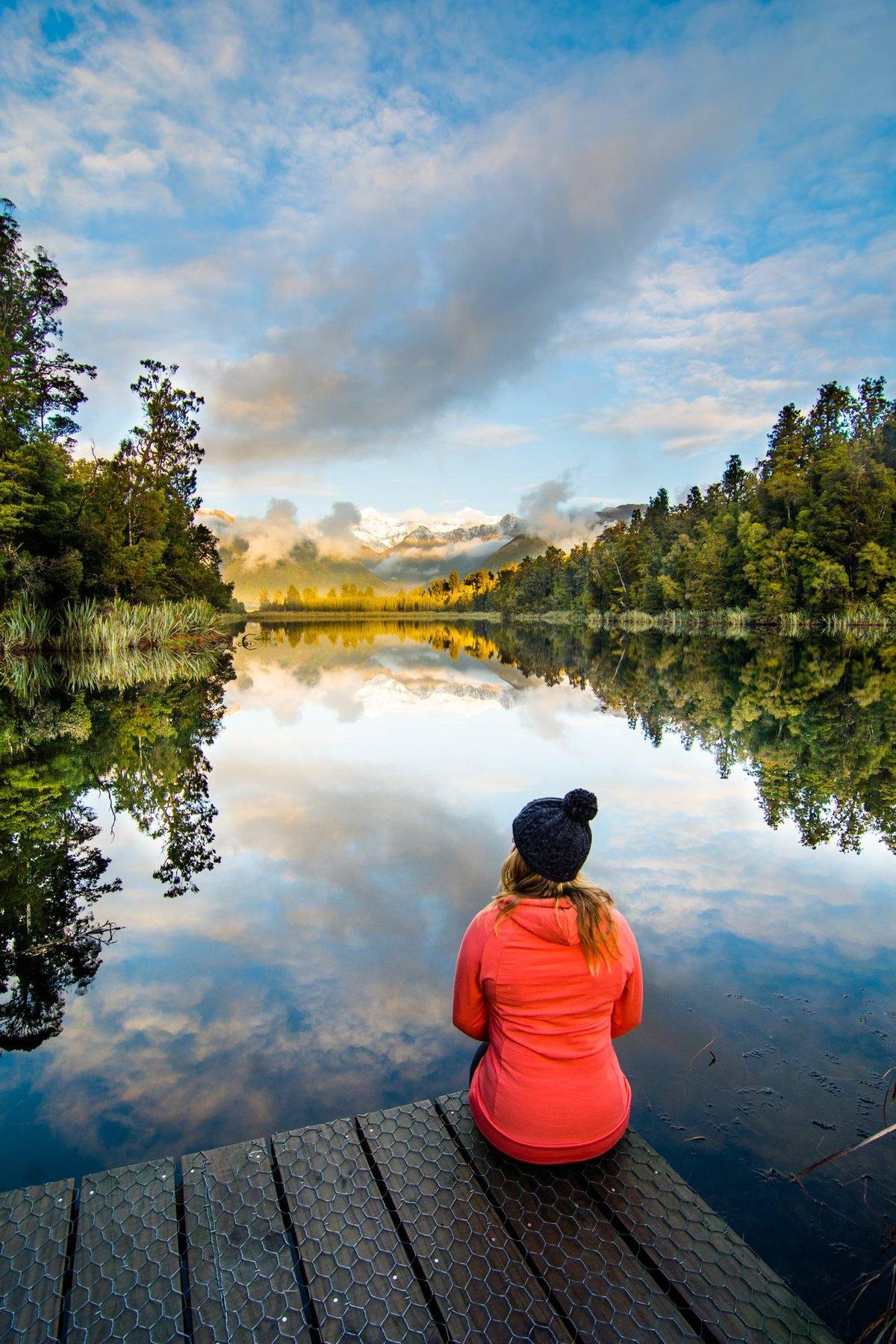
If even that track is closed, there are views without any walking at all. Lake Matheson and Peak Viewpoint, both on the road towards the coast, look up at the glacier's snowfields and the peaks above them.1213 On a clear evening those are some of the finest views of the whole system.
Your options
| Option | On the ice? | Time | Cost |
|---|---|---|---|
| South Side Walkway | No, a viewpoint | About 2 hours | Free |
| Guided nature walk | No | 3.5 hours | From a low fare |
| Snow landing flight | Snow, briefly | 25 minutes | Mid |
| Heli-hike | Yes, on foot | 4 hours | Highest |
Times from DOC and the GetYourGuide listings; live fares are in the calculator below.3
Three ways
FreeDOC's viewpoint track
 Quickest
A short flight
 The real thing
Walk on the ice
Decision helper
Start with what you want to feel
Ice collapse and rock fall can occur at any time at the terminal face of the glacier, and for this reason do not proceed beyond the rope barrier.
People did once walk onto the glaciers from below. DOC's history of the park recalls that by the start of the 1900s so many tourists visited the glaciers that the Government made annual grants to hoteliers for tracks and huts, and guides led parties up onto the ice.6 For decades, a Fox Glacier hike without a helicopter was simply how people saw the ice.
The glacier has since pulled back and changed shape. A 2014 study found that Fox and Franz Josef have lost about 3 km in length and at least 3 to 4 km2 in area since the 1800s, with the greatest loss between 1934 and 1983.7 There were advances too: at Fox, 710 m between 1985 and 1999, and 290 m between 2004 and 2008.8 But the same study called the retreat of 2014 the fastest in the records of both glaciers.9
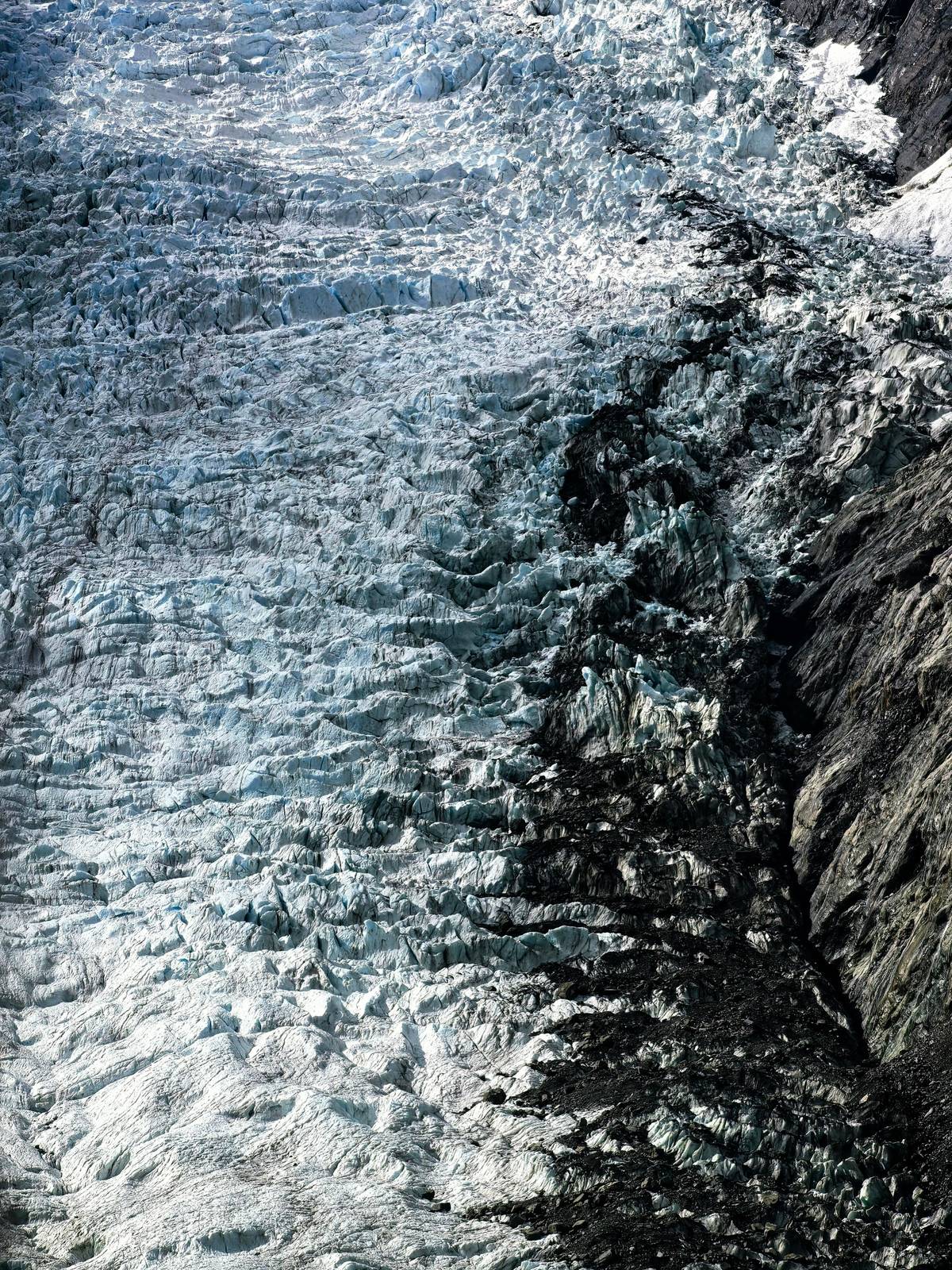
A retreating glacier leaves a steep, broken, unstable snout behind, surrounded by loose rock. That is exactly the ground that is now off limits. The ice higher up is reached by helicopter in a few minutes, and today that is how visitors get onto it.
Checklist
Cost for your group
Compare the totals for your party
Total from$130
pp from $65
Check availabilityfree cancellationWe take the lowest GetYourGuide fare for each trip, multiply it by the people in your party and show it in your currency at European Central Bank rates; your date sets the real total.
Video
We only contact YouTube after you tap the play button.
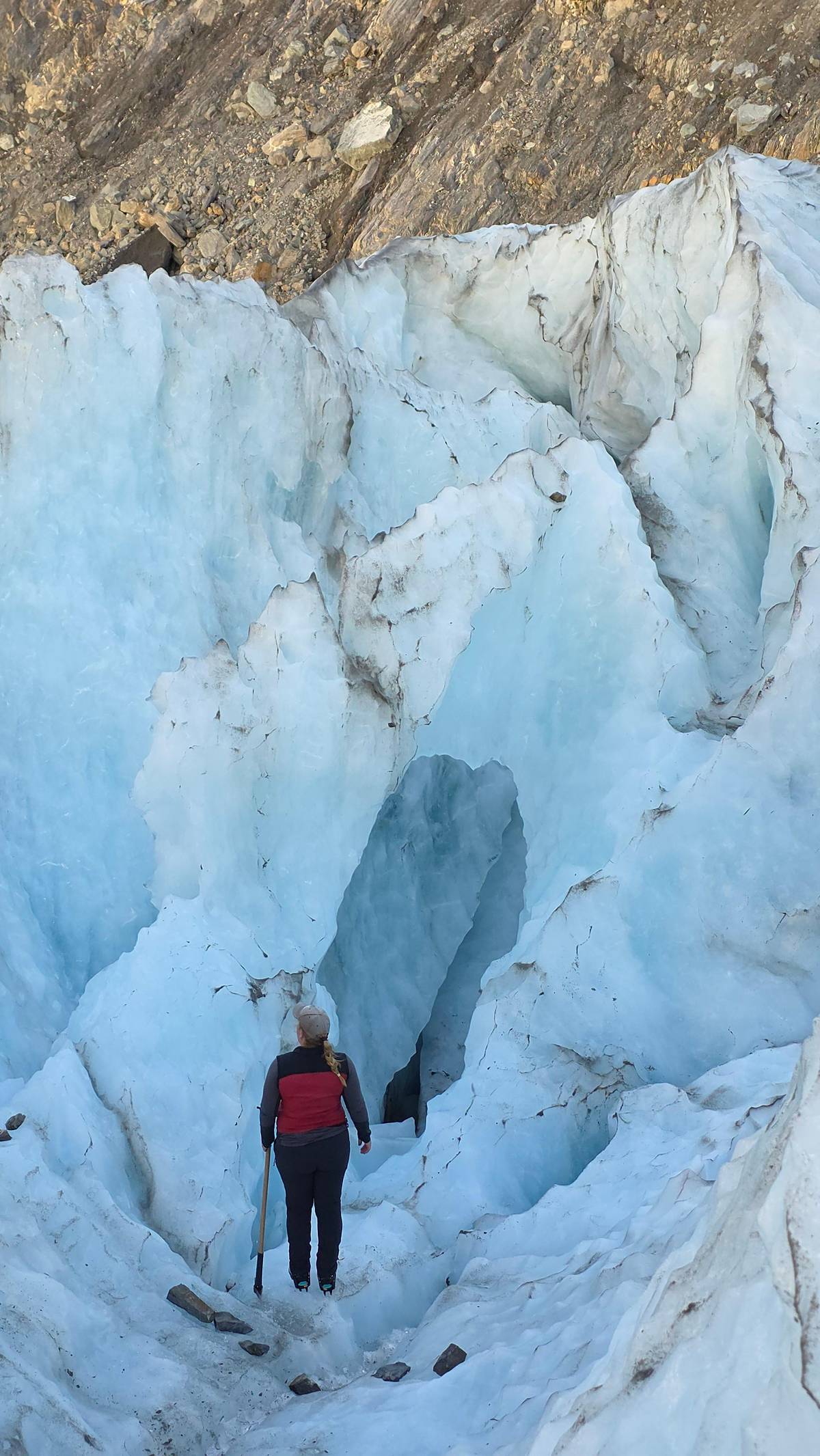
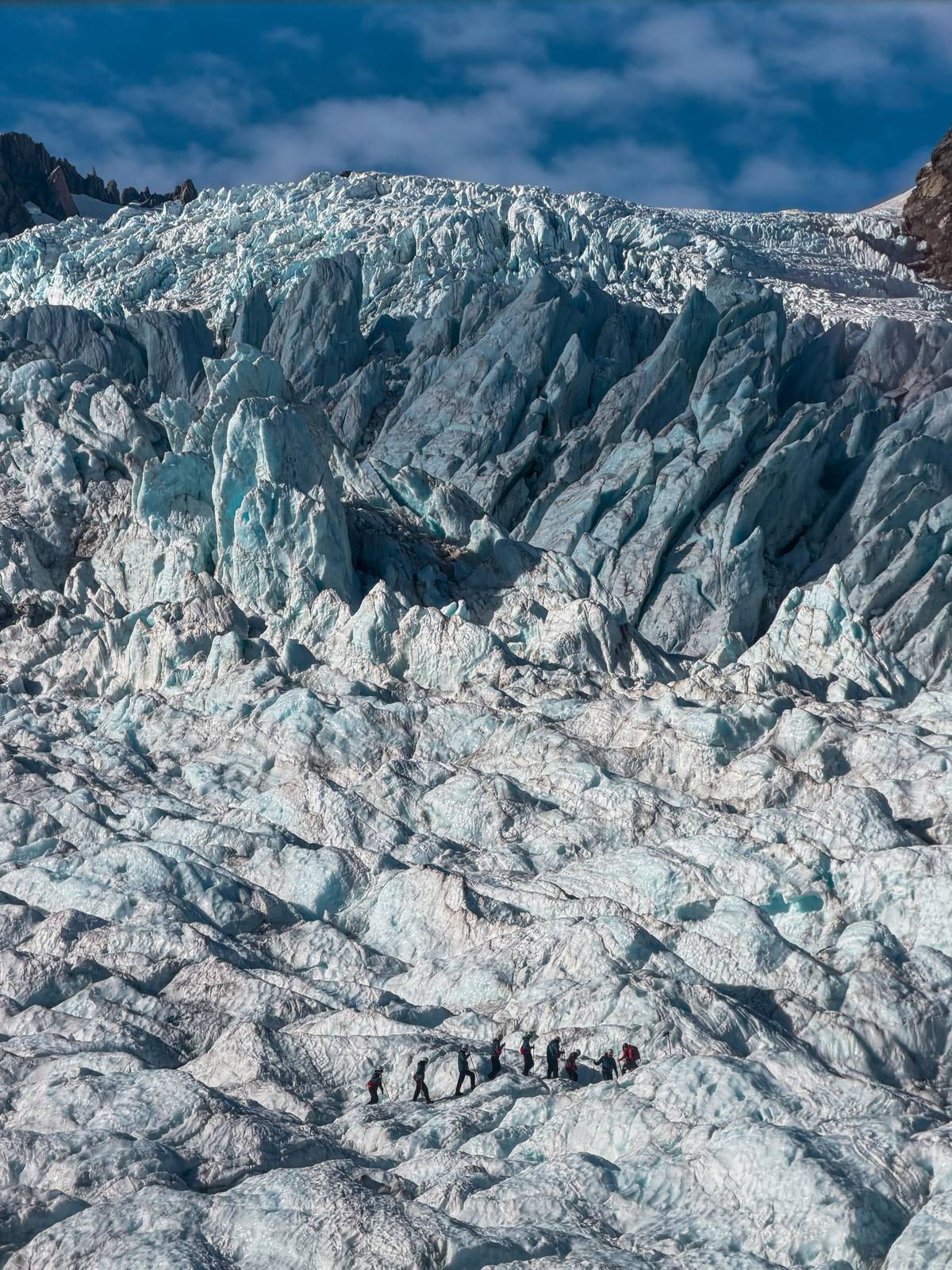
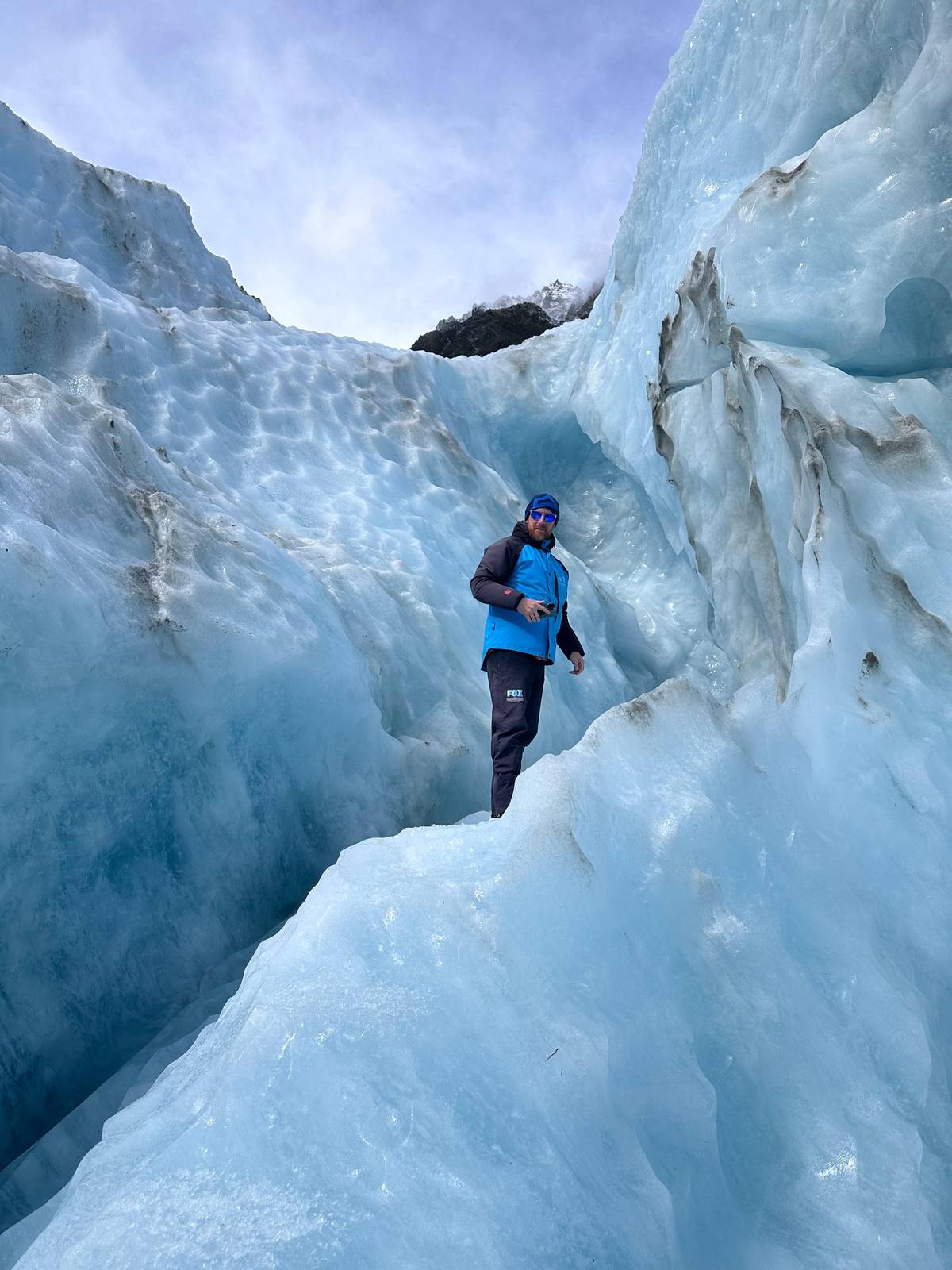
The heli-hike is the way to walk on the glacier today. After a 30-minute safety briefing at 44 Main Road, you take a short bus ride and a helicopter flight of about 5 minutes, then spend up to 3 hours on the ice with a guide. Boots, socks, crampons, poles and rain gear are included.
It has limits. The listing describes it as not suitable for children under 9, wheelchair users or people over 115 kg, and asks for a reasonable level of fitness and agility because the terrain is variable and reasonably challenging. It starts from $467, with free cancellation up to 24 hours before.
If walking for hours is not for you, a snow landing flight puts your feet on the glacier's snowfields for a few minutes. The shortest one from the township lasts 25 minutes in all, with about 8 minutes on the ground, and starts from $227. It is listed as wheelchair accessible.
Free first. The South Side Walkway gives you the glacier from the valley, Lake Matheson gives you its source peaks in a mirror, and Peak Viewpoint gives you the snowfields above it at sunset.31213 Add the Moraine Walk to see the rubble the glacier left behind in AD1600 and AD1750.14
For a small fee, a guided nature walk adds explanation and a lift. The 3.5-hour Fox half-day walking tour starts from $65, with groups limited to 10 participants, and says clearly that it goes no further than the public viewpoint. A guide is useful if you want to know what you are looking at, not only where to stand.
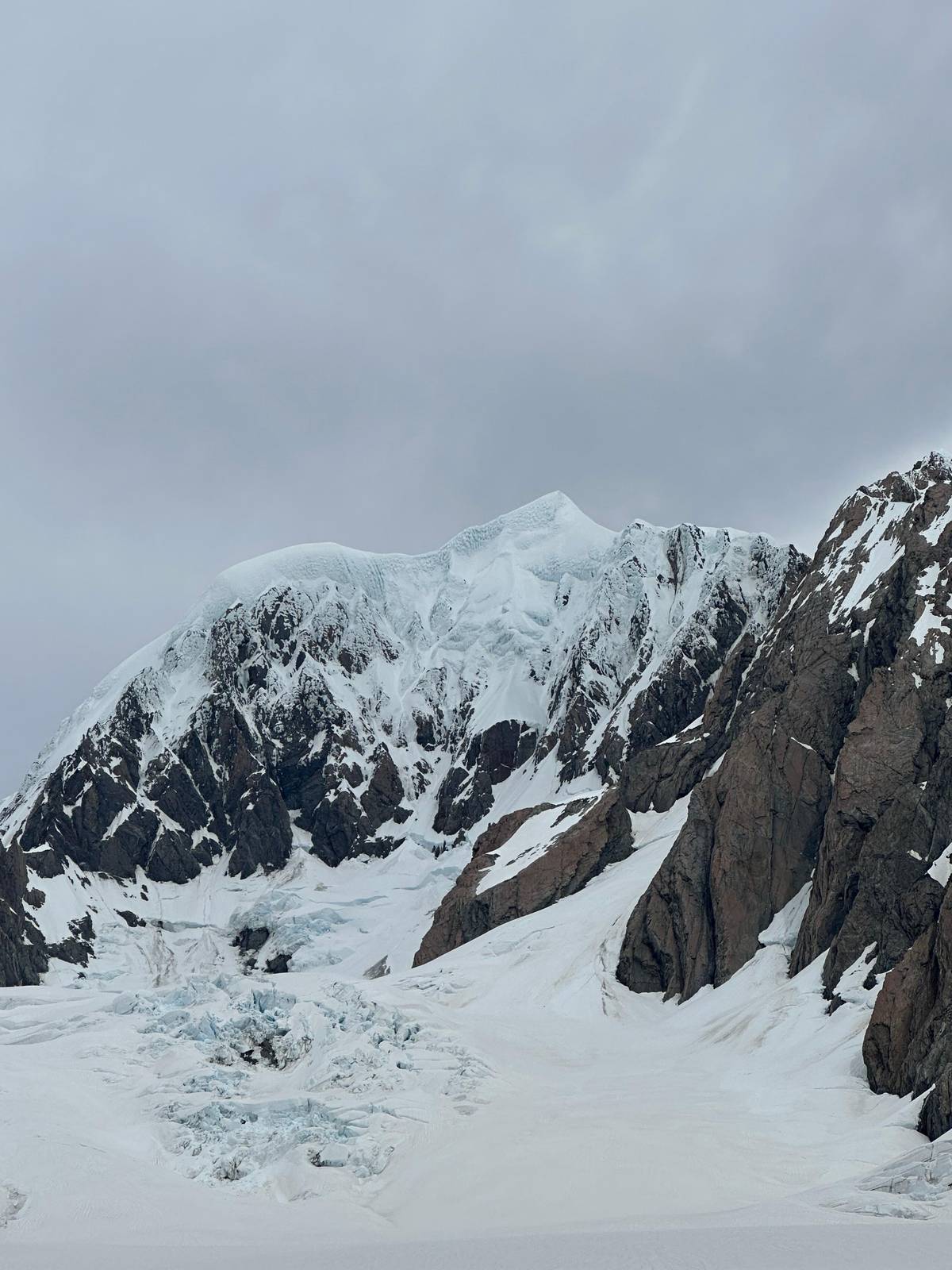
For the full experience, fly. The snow landing flight and the heli-hike cost more, but they are the only ways to see the upper glacier or stand on its ice. DOC itself says that to view the massive snowfields of the upper neve you need a flight in a helicopter or ski plane.15 Work out how to see Fox Glacier in the order your budget and the weather allow.
Before you pay for anything, decide what you actually want from the glacier. If the goal is a photograph of yourself on ice, a snow landing flight is shorter, cheaper and easier. If the goal is to feel crampons bite, peer into crevasses and spend real time up there, only the heli-hike does that. If the goal is to understand the landscape, a guided walk below the ice and an evening at Lake Matheson may satisfy you more than either.
Then check the limits that apply to your group. Ask about the age and weight rules, how the operator handles a weather cancellation and whether you can move to a later slot the same day. Read what is included, so you know whether to bring boots, food or extra layers. The listing for each trip states these points, and our guides quote them as written.
Finally, give the weather room. A single night in Fox with a fixed morning slot is a gamble on the West Coast. A second night, in Fox or in Franz Josef, turns that gamble into a reasonable plan, and you can fill any grounded hours with the free walks described above.
Even the helicopters work under limits. DOC grants concessions that let operators land at high-altitude landing sites in Westland Tai Poutini National Park.16 In March 2026 it said that climate change, reduced snow cover and glacier retreat affect the safety and usability of some of the 18 approved landing sites, particularly at peak times.10
The long-term trend is clear. Earth Sciences New Zealand's snowline survey, flown every March since 1977, saw retained snow on some glaciers in 2026 but no reversal of the overall trend of ice loss.1718 Access to the ice will keep changing, and the landing spots of today may not be the ones used in a few years.
That is a reason to go with realistic expectations rather than to stay away. Book the trip that fits you, keep a spare day for the weather, stay behind the barriers on foot, and enjoy the glacier for what it is now: a river of ice in retreat, still spectacular, and still reachable with a little help.
Pick your day
Flights, boots, crampons and rain gear included; free cancellation up to a day before.
No. DOC viewpoints are hundreds of metres from the face, and visitors must stay behind barriers.12
No. The valley tracks end at viewpoints; the ice is reached by helicopter.5
Up to 3 hours on a heli-hike. The whole trip takes 4 hours from check-in.
The free South Side Walkway. It is 6.4 km return and takes about 2 hours on foot.3
The glacier changed. Fox and Franz Josef have lost about 3 km in length since the 1800s.7
On some flights. The 25-minute Fox snow landing flight is listed as wheelchair accessible.
Yes, a DOC concession. DOC grants concessions for scenic landings at high-altitude sites in the park.16
Sources